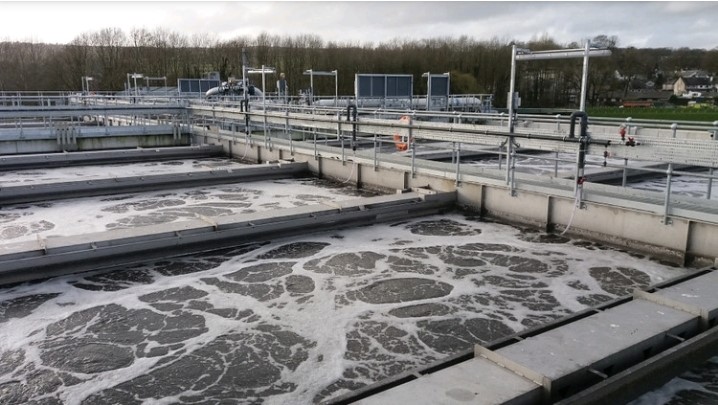
What is aerobic granular biomass?
Aerobic granular biomass/sludge is essentially a grouping of microbes which act together to remove various pollutants (such as nitrogen and phosphorous). This differs from conventional activated sludge water treatment plants in that the bacteria used to purify the water are naturally concentrated and provide a more varied, compact and efficient solution.
Where would this be most useful?
Firstly, these water treatment plants are especially useful in settings with limited resources and space. Because aerobic granular biomass allows for the purifying of a large variety of contaminants, a single-tank solution is possible. This saves on the amount of space needed for installation (with up to a 75% footprint saving) and provides up to twice the energy efficiency when compared with conventional activated sludge options.
As a specialist in implementing containerised water treatment plants, WEC Projects is also able to install Nereda® as a solution to expanding existing municipal wastewater treatment plants. An example of this would be to extend an activated sludge plant with a hybrid capacity extension.
This hybrid capacity extension allows for part of the raw sewage to be handled by the Nereda® plant while the rest is handled by the activated sludge plant. The advantage here is that excess granular biomass can be fed into the activated sludge system to help improve its settling properties, capacity and effluent quality.
Advantages in using Nereda® plants
Here are a few advantages in using Nereda® installations:
- Providing excellent effluent quality in a highly efficient manner
- Easy to operate
- Requires minimum staff to operate once installation is complete
- WECAssist is available if further operations and maintenance is required
There are many different ways or methods in order to achieve effective activated sludge wastewater management. At WEC Projects, we are keenly aware of this fact, because experience has taught us that different clients and settings have different requirements for their method of wastewater management. The following steps represent one of the conventional approaches to activated sludge wastewater management.
Activated Sludge Wastewater Management
Step 1: Screening and grit removal
Before the wastewater can be effectively processed, as much solid waste matter as possible needs to be removed. This is predominantly managed through screening and related methods such as bar racks and grit chambers.
Step 2: Primary clarification
Once solid matter such as debris, sand and algae has been removed, the remaining wastewater can then be moved into the primary clarifier. In the primary clarifier the wastewater is managed by allowing the heavier organic sediments or suspended solids to settle to the bottom of the basin. Wastewater treatment companies (among other studies) have found that a retention/detention time of 2 to 3 hours should remove between 50% and 70% of the suspended solids (with an assumed removal of 60%).
Step 3: Aeration
Once the primary clarification is complete the wastewater is moved through to an aeration tank where it is mixed with the activated sludge. This mixture, known as the mixed liquor, is then aerated (agitated by a constant supply of bubbles) which stimulates the aerobic processes and increases the growth rate of bacteria. The increased growth of bacteria in the mixed liquor leads to flocculation, effectively gathering and clumping together more of the remaining solid matter and waste material in the water.
Step 4: Secondary clarification
After the aeration is complete the wastewater management process moves into the secondary clarifier. Here the flocculated materials sink to the bottom of the secondary clarifier as sediment, effectively removing the remainder of the solid waste material.
Step 5: Disinfection
In the secondary clarifier the sediment and remaining water are separated, and the water is treated further by filtration to remove the finer suspended solids. After that the water is disinfected to remove any remaining waste matter or dangerous organisms, producing a clean effluent.
Get the correct solution for your individual setting
As mentioned earlier, this process represents only one of the various variations available in activated sludge wastewater management. Contact WEC Projects to get the best advice and solutions for your specific water and wastewater management needs. We’ve been serving the African continent’s needs for years, and we will use this experience to your advantage.


